
 hotack
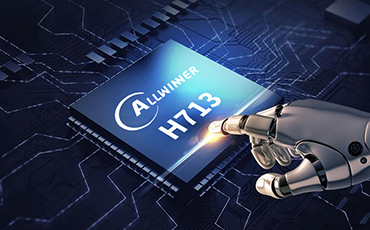
Explore projector chip technology, from integrated circuits and microprocessors to chips for image processing, smart functions, and wireless connections.
Semiconductor chips are essential components in modern electronic devices, including projectors. Over time, advances in integrated circuits, microprocessors, and system-on-chip (SoC) designs have enabled more compact hardware, more capable image processing, and increasingly connected entertainment systems.
Understanding this development helps explain how modern projectors process video, run smart operating systems, support wireless connections, and control image display. Although different projector technologies use different hardware architectures, semiconductor development continues to influence their capabilities and design.
From Transistors to Integrated Circuits
Before integrated circuits became practical, electronic equipment relied on individual components, including transistors, connected together to perform specific functions. As electronic systems grew more complex, designers needed ways to reduce component count, simplify connections, and improve reliability.
A major milestone came in 1958, when Jack Kilby demonstrated an integrated circuit at Texas Instruments. Robert Noyce independently developed a practical monolithic silicon integrated circuit approach in the late 1950s. These developments helped establish the foundation for modern semiconductor electronics.
An integrated circuit combines multiple electronic components into a single semiconductor device. Instead of assembling every circuit from separate components, engineers could integrate more functions into a smaller physical area.
This shift made it possible to build increasingly compact and capable electronic systems. Integrated circuits later became fundamental to computers, communication devices, digital displays, and projector electronics.
The Rise of Microprocessors
Integrated circuits created the foundation for another important development: the microprocessor. A microprocessor places the central processing unit (CPU) on a single chip, allowing programmable instructions to control electronic operations.
In 1971, Intel introduced the 4004, widely recognized as the first commercially available general-purpose microprocessor. It was initially developed in connection with a Japanese calculator project and demonstrated how CPU functions could be integrated into a compact semiconductor device.
The Intel 4004 did not contain every component needed for a complete computer system on one chip. It worked as part of a larger chipset and required supporting components. Nevertheless, its introduction marked an important step toward more flexible and programmable electronic products.
As microprocessors developed, they became central to computers, embedded controllers, consumer electronics, and other devices that need to process data and execute software.
For modern projectors, processing chips can manage incoming video signals, coordinate system operations, and support software features. The exact division of these functions depends on the projector’s hardware architecture.
VLSI and Increasing Chip Integration
As semiconductor manufacturing advanced, engineers found ways to integrate increasingly large numbers of transistors into a single chip. Very-large-scale integration (VLSI) describes this high level of circuit integration.
Higher integration enabled more complex processors and electronic functions without requiring a proportional increase in physical size. Improvements in fabrication processes, circuit design, and power management helped expand the capabilities of digital products.
However, chip development is not a simple sequence of fixed generations in which one technology completely replaces another. Microprocessors, memory chips, controllers, and specialized integrated circuits continue to evolve along different paths for different applications.
In projector design, this progress supports more sophisticated image processing, smaller control boards, and the integration of functions that previously required multiple separate components.
The Development of System-on-Chip Technology
A system-on-chip (SoC) integrates multiple functional blocks into one semiconductor device. Depending on its design, an SoC may include CPU cores, graphics processing, memory controllers, multimedia processing, and interfaces for connecting other components.
Not every SoC contains every function of an electronic system. Main memory, storage, wireless modules, and other components may remain separate. The specific integration depends on the intended application, performance requirements, power budget, and cost.
SoC technology is particularly relevant to smart projectors. A suitable processor platform can support an operating system, application interfaces, multimedia decoding, and selected connectivity functions within a compact product design.
By integrating multiple processing functions, an SoC can reduce the number of separate chips required for certain designs. However, overall performance still depends on the complete hardware configuration, software optimization, memory, cooling, and supporting electronics.
How Chips Work in Modern Projectors
Modern projectors can contain several types of semiconductor devices, each responsible for different tasks. A video-processing chip does not necessarily perform the same function as a display-control chip, and a wireless chip does not directly determine the projector’s native resolution.
1. Video Processing and Multimedia Decoding
Video-processing chips handle incoming image data and may support video decoding, scaling, color processing, and other image-related operations. In smart projectors, the main processor may also coordinate the operating system and application software.
Supported video formats and decoding capabilities depend on the processor, firmware, memory, and software implementation. Video decoding support should not be confused with native display resolution: a projector that decodes a high-resolution video source does not necessarily display that source at its original resolution.
2. Display Control and Image Formation
Projectors use different imaging technologies, and their semiconductor architectures reflect those differences. LCD projectors use liquid-crystal panels to form images, together with electronic circuits that process signals and control the display.
DLP projectors use a digital micromirror device (DMD), which contains an array of microscopic mirrors that control reflected light. A DLP chipset typically combines the DMD with a controller and other supporting components required by the design.
These architectures should not be treated as interchangeable. The imaging device, controller, optical system, and light source work together to determine how a projector produces its image.
For an example of a DLP-based product, see the Hotack D068 triple-laser ultra-short-throw DLP projector.
3. Smart Operating Systems and Applications
Smart projectors may use a processor platform to run an operating system, manage applications, display menus, and process user input. The processor’s capabilities and the software configuration influence the available functions and the overall user experience.
Memory and storage also matter. RAM supports active applications and system operations, while storage holds the operating system, installed applications, and other data. A capable processor alone cannot compensate for insufficient memory or poorly optimized software.
4. Wireless Connectivity and System Control
Depending on the model, a projector may include separate or integrated components for Wi-Fi, Bluetooth, wired interfaces, and other communication functions. These components enable supported network connections, wireless audio, screen sharing, and connections to external devices.
Other electronic circuits may control power delivery, temperature monitoring, fan operation, sensors, and image-adjustment functions. Automatic focus and keystone correction, for example, depend on the product’s sensors, control hardware, and software rather than on a processor alone.
How Chip Technology Affects Projector Performance
Chip specifications help explain a projector’s capabilities, but no single processor specification determines the entire viewing experience. Buyers should evaluate the complete system rather than selecting a projector solely by its processor model.
| System Component | Primary Role | What Buyers Should Consider |
|---|---|---|
| Main Processor or SoC | System operations and supported processing tasks | Processor platform, operating system, and supported functions |
| Video Processing | Video decoding and image-data processing | Supported formats and decoding capabilities |
| Display Controller | Coordinates signals and display operation | Compatibility with the imaging architecture |
| Imaging Device | Forms the projected image | LCD or DLP technology and native resolution |
| Memory and Storage | Supports software execution and data storage | RAM, storage capacity, and software requirements |
| Connectivity Components | Enable supported wired and wireless connections | Wi-Fi, Bluetooth, interfaces, and device compatibility |
| Power and Thermal Control | Supports stable system operation | Power requirements, cooling design, and operating conditions |
Brightness, color performance, contrast, and image sharpness also depend on the light source, optical design, imaging device, calibration, and thermal conditions. A more advanced processor does not automatically produce a brighter image or higher native resolution.
Choosing Chip Configurations for Projector OEM and ODM Projects
For projector brands, importers, and distributors, chip selection is part of a wider product-development decision. The appropriate configuration depends on the target market, product positioning, expected features, and manufacturing requirements.
Before selecting a projector platform, B2B buyers should consider several questions:
- What is the intended application? Home entertainment, portable projection, education, and business use may require different hardware capabilities.
- Which display technology is required? LCD and DLP designs use different imaging components and associated control architectures.
- What native resolution is needed? Confirm the imaging system’s native resolution separately from supported video decoding formats.
- Which smart functions are required? Confirm the operating system, supported applications, processor capabilities, memory, and storage.
- What connectivity is necessary? Define the required wireless standards, physical interfaces, and compatibility with external devices.
- What are the power and thermal constraints? Processor performance must be considered alongside cooling, power consumption, and the product’s physical design.
- What documentation and lifecycle support are required? Consider the intended market, applicable compliance requirements, software maintenance, and component availability.
These requirements should be considered together. Selecting a chip with more processing capability than the application needs may increase cost or power consumption without delivering a meaningful improvement to the final product.
Hotack provides projector OEM and ODM services for B2B customers evaluating product development, configurations, and customization requirements.
Frequently Asked Questions About Projector Chip Technology
What is a projector chip?
A projector chip is a semiconductor component used for a specific function within a projector. Depending on the design, chips may process video, run software, control an imaging device, manage power, or provide connectivity.
What is the difference between a microprocessor and an SoC?
A microprocessor primarily refers to a processor implemented on a chip. An SoC integrates multiple functional blocks, potentially including processing cores, graphics, controllers, and interfaces, into a single semiconductor device. The exact functions depend on the design.
Does a better processor make a projector brighter?
Not necessarily. Projector brightness depends primarily on the light source, optical system, imaging architecture, and system design. A processor can affect image processing and supported features, but it does not independently determine light output.
Does 4K video decoding mean a projector has native 4K resolution?
No. Video decoding describes the ability to process a supported video format, while native resolution describes the image resolution produced by the imaging system. These specifications should be checked separately.
Do LCD and DLP projectors use the same imaging chips?
No. LCD projectors use liquid-crystal panels to form images, while DLP projectors use a digital micromirror device. Both types also require supporting electronics, but their imaging architectures differ.
Conclusion: Chip Development Continues to Shape Projector Technology
The evolution from integrated circuits and microprocessors to modern SoCs has expanded the functions that electronic devices can perform within compact designs. In projectors, semiconductor components support video processing, image control, smart operating systems, wireless connectivity, and system management.
However, projector performance depends on the complete system. Imaging technology, native resolution, brightness, optical design, software, memory, and thermal management must work together to deliver the intended result.
For businesses evaluating projector sourcing or product customization, understanding these components provides a useful foundation for comparing specifications and defining product requirements.
Explore the Hotack projector range or learn more about projector OEM and ODM services for B2B product-development needs.
